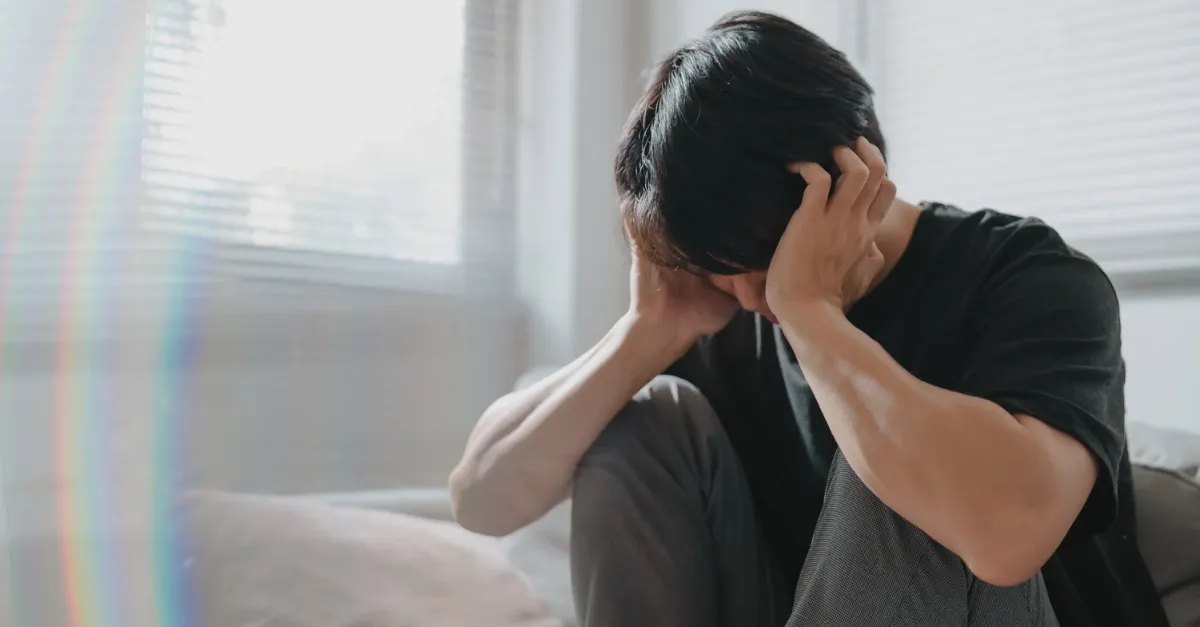
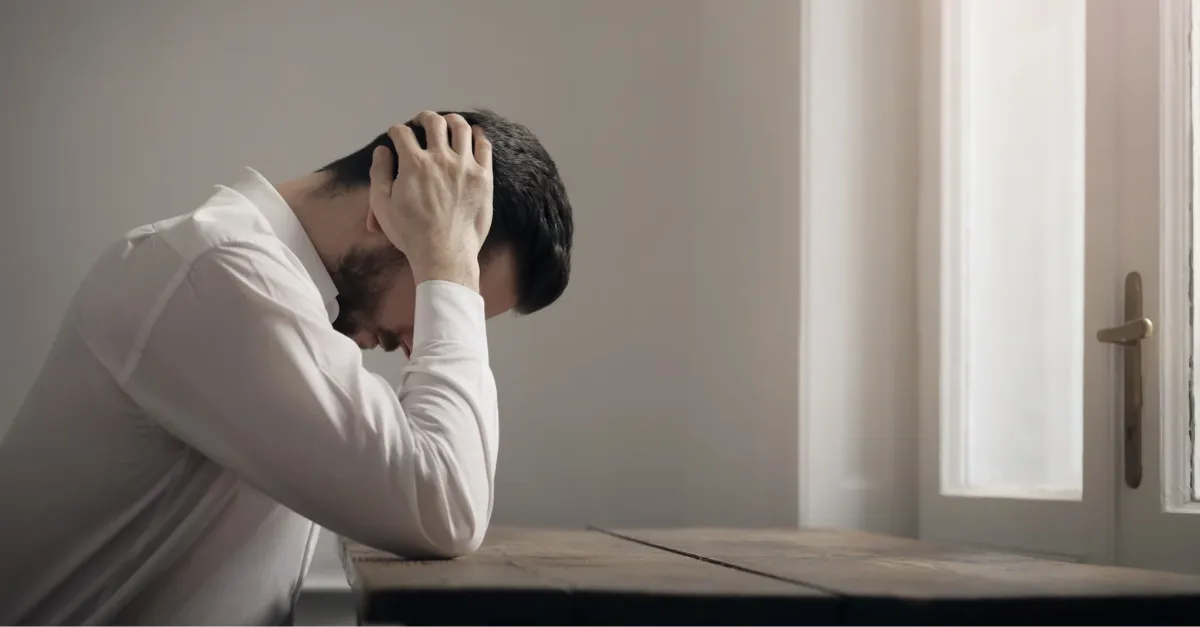
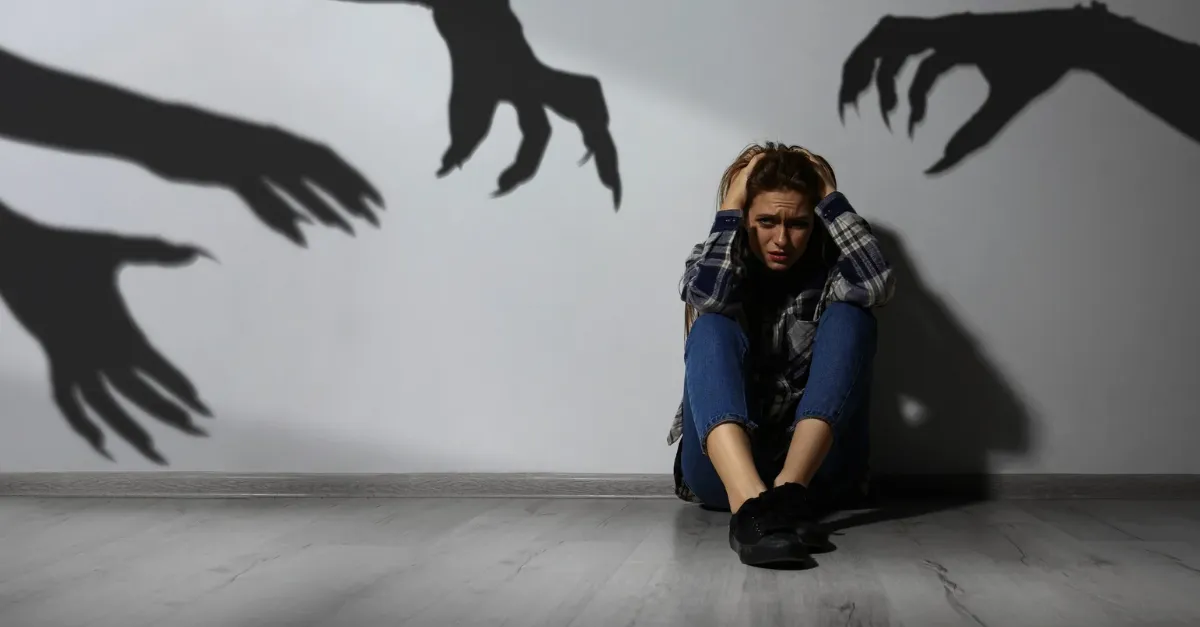
 The panic rarely arrived because of a spider, a towering height, or a closed-in elevator. Instead, it struck in the quiet, empty spaces between moments, catching you completely off guard while you were simply sitting at your kitchen island drinking a glass of water. You felt a sudden, familiar prickle of heat crawl up the back of your neck, your breath shortened, and your chest tightened into a rigid knot. But the terrifying thought wasn't about the room or the time of day—it was the crushing, meta-level dread whispering inside your skull: "Oh no. It's happening again. Am I about to have a full-blown panic attack right now?"
In that exact split second, your fear stopped being about any external object or environmental trigger. You weren't terrified of the dark or the open street; you were utterly, agonizingly terrified of **fear itself**. You spent the next twenty minutes locked in an exhausting internal wrestling match, monitoring your heart rate, scanning your physical sensations for signs of distress, and desperately trying to outrun your own nervous system. By the time the surge passed, you felt as fragile as spun glass, sitting alone in the quiet house with a haunting, isolating question echoing in your chest: "What kind of person is afraid of their own fear? Is there a name for the invisible cage I’ve built around my life?"
If you know the dizzying, labyrinthine exhaustion of fearing the very emotion of panic, you need to hear a vital clinical truth right before we go any further: you are not losing your mind, you are not weak, and you are not uniquely broken. What you are experiencing has a very real, scientifically documented clinical name: **phobophobia**, or the persistent, debilitating fear of developing a phobia or experiencing acute anxiety and panic. As clinicians and mental health writers who have sat across from individuals battling this precise loop, we know how deeply isolating it feels. But understanding the architecture of phobophobia is the first, most powerful step toward dismantling it and reclaiming your inner freedom.
1. The Psychological Labyrinth: What Is Phobophobia?
To truly grasp what a phobia of phobias is, we must look beyond standard psychiatric definitions and examine how the human brain processes survival. In clinical psychology, a standard phobia involves an irrational, intense fear of a specific trigger—such as heights (acrophobia) or enclosed spaces (claustrophobia). When a person encounters that trigger, their sympathetic nervous system activates a fight-or-flight response.
Phobophobia, however, inverts this mechanism entirely. In a state of phobophobia, **the trigger is the physiological sensation of anxiety itself.** The individual becomes hyper-vigilant, constantly scanning their internal landscape for any sign of a racing heartbeat, lightheadedness, or shallow breathing. The brain essentially forms a fear loop:
- You feel a minor physical sensation (e.g., a fast pulse from drinking coffee or climbing stairs).
- Your hyper-vigilant mind misinterprets that normal sensation as the early warning sign of an impending panic attack.
- The fear of the upcoming panic attack actually causes a genuine panic attack.
- The cycle cements itself, making you increasingly afraid of your own body's natural reactions.
This relentless self-monitoring creates an exhausting psychological prison. You stop exercising because a high heart rate feels dangerous; you avoid drinking coffee; you skip social events out of a lingering dread that you might feel overwhelmed in public. Your world shrinks, not because of the outside world, but because you are afraid of what your own internal emotional weather might do.
"Phobophobia turns the human body into a battleground where the self is at war with its own survival mechanisms. Healing begins not by fighting the fear, but by teaching the nervous system that internal sensations are messengers, not monsters."
— Dr. Viktor Frankl, Psychiatrist & Author
2. The Neurobiology of Anticipatory Dread
Why does the brain trap us in this looping feedback mechanism? The answer lies within the amygdala—the brain's emotional command center. When you experience severe anxiety or panic in the past, your amygdala etches that memory into deep neural pathways as a life-threatening event.
In cases of phobophobia, the amygdala becomes hyper-sensitized to *any* bodily shift that mirrors past distress. It treats a slightly elevated heart rate with the exact same biochemical alarm siren it would use if you were facing a physical predator. This chronic anticipation floods your bloodstream with cortisol and adrenaline day after day, keeping your nervous system trapped in a state of unremitting exhaustion.
When your biological foundation is running on high alert like this, it affects every facet of your existence—from your cognitive clarity to your emotional resilience. If you are looking to build a sustainable, gentle framework that buffers your nervous system against this kind of chronic hyper-arousal, exploring our foundational guide on tips for good mental health provides essential daily strategies to lower baseline stress.
3. The Heavy Toll of the "Fear of Fear" Cycle
Living with phobophobia is uniquely agonizing because it feels entirely invisible to the outside world. To your coworkers, family members, or friends, you may appear completely composed. Yet internally, you are expending ninety percent of your cognitive energy just managing your internal state.
The Hidden Symptoms and Manifestations of Phobophobia:
• Body Scanning: Chronically checking your pulse, monitoring your breathing depth, or testing your balance throughout the day.
• Safety Behaviors: Carrying water bottles everywhere, sitting near exits, or relying on a trusted companion to feel "safe" in public.
• Anticipatory Exhaustion: Dreading upcoming events days or weeks in advance solely out of fear that anxiety might flare up.
• Derealization/Depersonalization: Feeling disconnected from your body or surroundings during high-anticipation moments as a psychological defense mechanism.
This constant state of self-surveillance drains your emotional reserves, often leading to secondary depression, professional burnout, and relational isolation. Breaking this pattern requires a compassionate, clinical approach that focuses on restoring trust between your conscious mind and your physical body.
4. A 5-Step Clinical Blueprint: Overcoming Phobophobia
You cannot bully, shame, or logic your way out of phobophobia. Because the fear is rooted in the primitive nervous system, recovery requires retraining your biological responses through consistent, gentle exposure and somatic re-education. Implement this clinical framework to break the loop:
Step 1: Radically Accept the Physical Sensation Without Labeling It
When you feel your heart beat faster or your chest tighten, your immediate instinct is to panic and try to stop it. Change the script. Instead of fighting the sensation, practice radical acceptance: "My heart is beating fast right now. That is uncomfortable, but it is just adrenaline. It cannot hurt me, and I am willing to let it be here."
Step 2: Practice Interoceptive Exposure (Desensitization)
Interoceptive exposure is a gold-standard clinical technique where you deliberately induce mild, safe physical sensations associated with anxiety (such as spinning in a chair to cause lightheadedness, or breathing through a narrow straw to mimic shortness of breath) while remaining completely safe. By teaching your brain that these sensations are harmless and temporary, you strip them of their terror.
Step 3: Cultivate Comprehensive Self-Care Protocols
A sleep-deprived, nutritionally depleted body is vastly more vulnerable to panic loops and anticipatory dread. Protecting your neurological baseline through consistent rest, balanced nutrition, and gentle pacing is non-negotiable. For structured, low-friction habits that shield your mind from emotional burnout, review our expert resource on self-care tips for anxiety.
Step 4: Shift from Hyper-Vigilance to Somatic Grounding
When you catch yourself body-scanning for symptoms, consciously redirect your attention outward. Engage your physical senses: name three textures you can touch, two sounds you can hear, and one scent in the room. Grounding anchors your prefrontal cortex, pulling your consciousness out of the anxious fear loop.
Step 5: Prioritize Holistic Psychological Growth
Healing from a complex condition like phobophobia is part of a larger journey toward profound emotional maturity and self-compassion. To explore deep, sustainable milestones that foster long-term psychological strength and inner clarity, consult our master guide on improving mental health.
5. Word-for-Word Scripts to Disarm Anticipatory Dread
When you feel the familiar static of phobophobia creeping into your thoughts, use these clinically validated, grounding scripts to interrupt the fear cycle and signal safety back to your nervous system:
- When you catch yourself body-scanning for panic symptoms:
"I am scanning my body for danger out of habit, but right now, my body is just doing its normal work. I choose to release this control and let my heart beat however it needs to." - When anticipatory dread strikes before leaving the house:
"Even if I feel anxious while I am out, anxiety is uncomfortable, but it is not dangerous. I am strong enough to experience discomfort without letting it run my life." - When a wave of sudden internal heat or tension hits:
"This is just an adrenaline spike passing through my system. It is a wave in an ocean—it will peak, and then it will naturally recede. I am safe."
Stepping Out of the Internal Cage
Navigating what a phobia of phobias is—and realizing you are living inside its invisible architecture—can feel overwhelming at first glance. But naming the beast strips away half of its terrifying power. You are no longer fighting an amorphous, ghostly shadow; you are simply retraining an overprotective nervous system that cares too much about your safety.
Remember that healing is a gentle, non-linear unfolding. Every time you refuse to run from a physical sensation, every time you choose curiosity over terror, you are laying down new neural pathways of peace and resilience. Take a slow, deep breath, drop your shoulders away from your ears, unclench your jaw, and give yourself full permission to step out of the cage. You are safe, you are capable, and you possess every tool required to reclaim your life from fear.