 The grocery store was only three blocks from your front door—a trip you had made hundreds of times without a second thought. But on that humid Thursday afternoon, as you stood in Aisle 4 surrounded by fluorescent lights and humming refrigerators, your world suddenly tilted on its axis. Out of nowhere, an icy wave of terror surged from the pit of your stomach up into your chest. Your heart began to hammer against your ribs like a trapped bird, your breath caught in your throat, and the room started to spin. The voices of nearby shoppers echoed as if underwater, and a terrifying, primal thought seized your brain: "I am going to collapse right here, or go crazy, and nobody can help me."
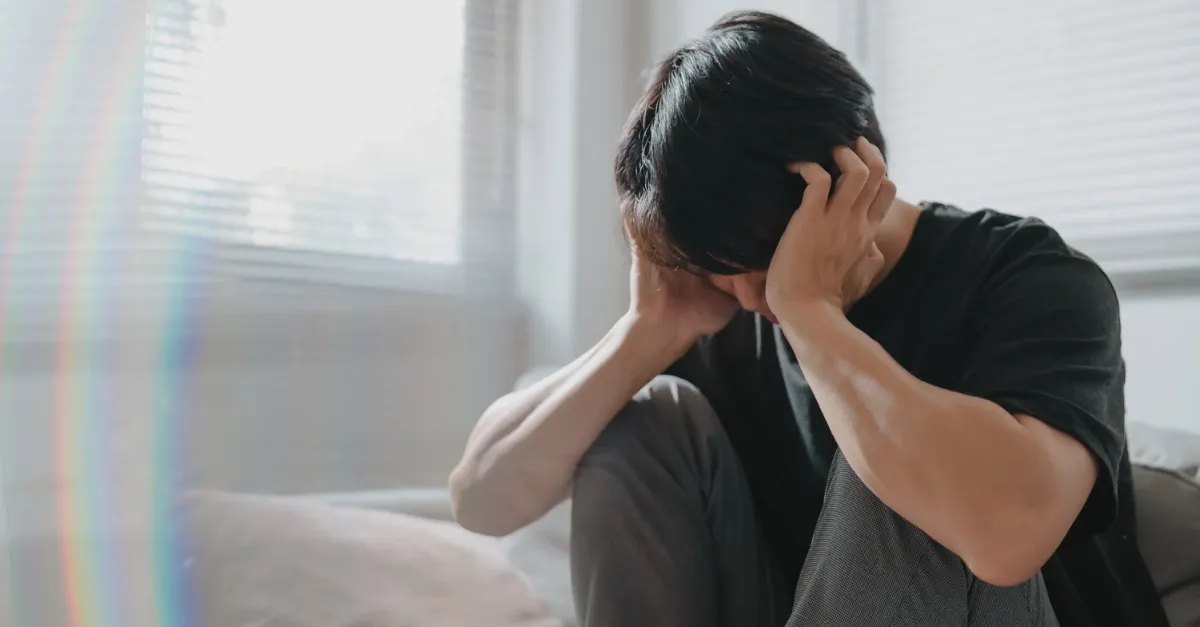
You abandoned your shopping cart right in the middle of the aisle, practically ran out the automatic sliding doors, and stumbled back to your car with hands shaking so violently you could barely turn the ignition key. When you finally made it back into your bedroom, you pulled the blankets over your head, chest still heaving, and sobbed into the pillow. That was six months ago. Since that day, your world has shrunk, inch by agonizing inch. First, it was grocery stores. Then, highway driving. Then, crowded cafes. Now, even stepping onto your own front porch makes your stomach churn with dread, forcing you back into the small, safe fortress of your home.
If you are trapped in this invisible prison, struggling under the overwhelming weight of panic disorder with agoraphobia, you need to hear this compassionate truth from a clinical perspective: you are not crazy, you are not weak, and you are not permanently broken. What feels like a personal failing is actually a deeply miscalibrated internal alarm system—a body that has learned to fear fear itself. But just as your nervous system learned to associate the outside world with danger, it can gently, courageously relearn that safety is possible again.
1. What Is Panic Disorder with Agoraphobia? Decoding the Invisible Fortress
To break free from a fortress, you must first understand how its walls were built. Many people confuse agoraphobia with a simple "fear of open spaces" or a fear of crowd density, but the psychological reality is much more complex:
A. The Fear of the Panic Response Itself
At its core, agoraphobia is not a fear of places; it is the profound fear of experiencing incapacitating panic symptoms in a situation where escape might be difficult, embarrassing, or impossible. It is anxiety about the anxiety itself—a self-perpetuating cycle where the anticipation of a panic attack triggers the very attack you dread.
B. The Shrinking Perimeter of Safety
Panic disorder usually comes first: sudden, unprovoked surges of intense terror accompanied by terrifying physical sensations. After experiencing one or two debilitating attacks in public, the brain's survival instinct makes a misguided logical leap: "The grocery store caused that horror, so I must never return there." As more locations become associated with potential panic, your "safe zone" shrinks until only your home remains.
C. The Role of Safety Behaviors and Safe Persons
Many individuals living with agoraphobia develop subtle coping mechanisms to navigate the outside world—only driving along specific side streets, always carrying a bottle of water, wearing sunglasses indoors, or relying on a "safe person" (a spouse, parent, or trusted friend) to accompany them everywhere. While these behaviors offer temporary relief, they inadvertently reinforce the brain's belief that you cannot survive without a shield.
"Agoraphobia is not a fear of the world outside; it is a profound loss of trust in your body's ability to handle intense discomfort in public. Healing is the process of restoring that bodily trust."
— Dr. Claire Weekes, Pioneer in Anxiety Treatment & Author
2. The Mind-Body Spiral: Why Your Body Reacts So Violently
One of the most distressing aspects of panic disorder with agoraphobia is the intense physical betrayal you feel from your own body. When panic strikes, your sympathetic nervous system initiates a full-blown "fight-or-flight" surge, flooding your bloodstream with adrenaline, constricting blood vessels, and altering your digestion.
The Classic Symptoms of Panic Flight:
• Cardiovascular Spike: Palpitations, racing heartbeat, or tightness in the chest that mimics a heart condition.
• Hyperventilation & Dizziness: Rapid, shallow breathing that alters oxygen/CO2 balance, causing lightheadedness and tingling extremities.
• Gastrointestinal Distress: Sudden nausea, cramping, or severe digestive butterflies. To understand why your gut reacts so dramatically under stress, explore the physiological roots of stomach anxiety symptoms.
• Derealization/Depersonalization: A terrifying feeling that the world around you is fake, dreamlike, or detached from reality.
3. A 5-Step Clinical Blueprint to Reclaim Your World
Overcoming agoraphobia requires moving away from avoidance and toward gradual, compassionate engagement with discomfort. This evidence-based framework will guide your path to recovery:
Step 1: Psychoeducation—Demystifying the Panic Response
Understand that panic symptoms, while profoundly uncomfortable, are not dangerous. An adrenaline surge cannot kill you, stop your breathing, or make you lose your mind; it is simply an ancient physiological mechanism designed to protect you from a tiger that isn't there. When you stop fighting the physical sensations and recognize them as harmless misfires, their power dissolves.
Step 2: Graded Exposure Therapy (Building Your Fear Ladder)
Recovery does not mean jumping straight into a packed stadium. You rebuild freedom systematically using graded exposure. Create a list of feared situations ranked from 1 (least scary) to 10 (most terrifying):
- Level 1: Standing on the front porch for 2 minutes alone.
- Level 3: Walking to the end of the block and back.
- Level 5: Sitting in a quiet coffee shop near the exit for 10 minutes.
- Level 8: Driving 10 minutes down a quiet highway.
- Level 10: Shopping in a busy supermarket during peak hours.
Step 3: Floating Through Discomfort (The Claire Weekes Method)
When you take a step up your exposure ladder and feel anxiety rising, do not tense up, run away, or fight it. Practice the four sacred principles of recovery:
- Face: Stop running from the sensation. Turn around and face it directly.
- Accept: Allow your body to feel nervous. Let your heart beat fast without demanding that it slow down immediately.
- Float: Relax your muscle group by group. Imagine floating on top of the wave of panic rather than trying to swim against it.
- Let Time Pass: Remind yourself that adrenaline has a natural half-life. Every surge of panic naturally subsides within 10 to 20 minutes if you don't feed it new fear.
Step 4: Interoceptive Exposure (Familiarizing with Sensations)
In a safe therapeutic or home environment, deliberately induce mild physical panic symptoms so your brain learns not to fear them. Spin in a chair for 30 seconds to simulate dizziness, or breathe through a thin straw to simulate shortness of breath. When you realize you can handle these sensations safely at home, you won't fear them in public.
Step 5: Celebrating Micro-Victories and Abandoning Perfectionism
Healing from agoraphobia is rarely a straight line. You will have days where you walk a mile with ease, followed by days where stepping out the door feels daunting again. A "bad day" is not a setback or a reset button; it is simply a natural part of your nervous system recalibrating itself.
4. Word-for-Word Grounding Scripts During an Exposure Walk
When you are practicing stepping out of your safe zone and anxiety begins to swell in your chest, repeat these calm, clinically regulated internal statements to keep your footing:
- When the initial wave of fear strikes in public:
"My body is releasing adrenaline right now, but I am in no physical danger. I don't need to run home; I can sit here safely and let this feeling pass." - When physical symptoms (racing heart, lightheadedness) escalate:
"This is just discomfort, not danger. My body knows how to regulate itself. I will drop my shoulders, unclench my jaw, and float right through this." - When the urge to flee becomes almost overwhelming:
"I can stay just two more minutes. Even if I feel panicked, I am proving to my brain that I can endure this environment and emerge safe." - When self-doubt creeps in after a tough day:
"One hard moment does not erase my progress. I am retraining my nervous system, and courage is showing up even when my hands are shaking."
Stepping Back Into the Light of Your Life
Living with panic disorder with agoraphobia can make you feel as though your life has been permanently put on pause, reduced to a shadow of what it used to be. But the walls of your comfort zone are not made of stone—they are made of fear, and fear dissolves when met with steady, compassionate exposure.
You do not have to conquer the whole world today. All you need to do is take one small, brave step beyond the threshold of your comfort zone, take a long, slow breath, and trust that you are far stronger than the panic you carry. The world outside is waiting for you, and piece by piece, you are going to win your life back.